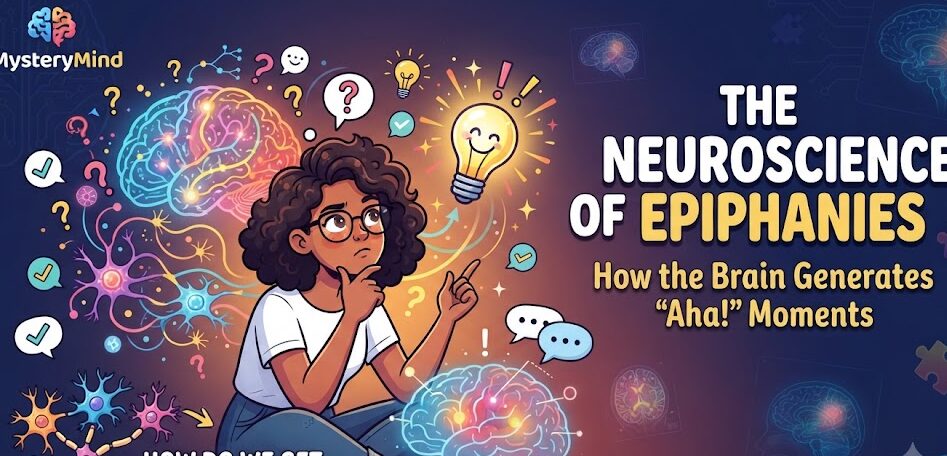
1. Theoretical Foundations: The Dual Modalities of Problem Solving
Human intellectual problem-solving operates via two fundamentally distinct neurocomputational modalities: deliberate analytical deduction and spontaneous cognitive insight (the epiphany or ‘Aha!’ moment). In deliberate analytical processing, an individual advances incrementally toward a solution through conscious, methodical steps—evaluating permutations, executing formal algorithms, and feeling a gradual, linear increase in subjective proximity to the resolution. In contrast, an insight solution arrives with sudden, discontinuous clarity: an individual feels completely blocked (the impasse state), and then, without conscious forewarning, the complete, integrated solution emerges into awareness accompanied by a visceral feeling of certainty and positive affect.
Historically, scientific philosophy attributed sudden insights to mystical inspiration or serendipitous chance (such as Archimedes in his bath or Kekulé visualizing the benzene ring). Modern cognitive neuroscience, spearheaded by high-density electroencephalography (EEG) and functional magnetic resonance imaging (fMRI), has demystified this phenomenon. Epiphanies are not spontaneous miracles; they are the outward conscious culmination of highly complex, sub-threshold parallel computational processes executed by distributed semantic networks while the conscious prefrontal cortex is momentarily disengaged.
Understanding the neural architecture of insight problem-solving provides profound clinical and practical implications: it reveals why brute-force mental exertion frequently leads to intellectual paralysis, and how deliberate modulation of neural oscillatory states can systematically catalyze creative breakthroughs in science, engineering, and strategic deduction.
2. Neuroanatomical Substrates: The Right Anterior Superior Temporal Gyrus (aSTG)
In landmark neuroimaging paradigms utilizing Remote Associates Test (RAT) problems and verbal anagrams, cognitive neuroscientists Mark Beeman and John Kounios identified the precise anatomical epicenter of insight problem-solving:
The Right Hemisphere Anterior Superior Temporal Gyrus (RH aSTG): While both analytical and insight solutions recruit bilateral visual and parietal networks, sudden insight solutions exhibit a distinct, statistically robust focal activation within the right anterior superior temporal gyrus. While the left hemisphere processes language with narrow, highly focused semantic fields (essential for precision, grammar, and literal syntax), the right temporal lobe maintains broad, distant, and diffuse semantic associations.
When faced with an intractable intellectual impasse, the left hemisphere’s dominant, high-probability associations have typically reached a dead end. The right aSTG acts as an associational bridge, scanning distant, weakly activated semantic nodes across cortical memory stores. When two previously disconnected conceptual domains are discovered to share an underlying mathematical or logical symmetry, the right aSTG binds them together, generating the unified insight representation.
The Anterior Cingulate Cortex (ACC) Sensitivity Switch: Preceding the emergence of an insight, the dorsal anterior cingulate cortex exhibits elevated activity. The ACC monitors cognitive conflict and signals when unconventional or non-dominant ideas are competing with dominant thought patterns. A sensitive, quiet ACC detects the subtle, weak signal generated by the right temporal lobe, allowing the faint novel idea to break through the sensory noise into conscious working memory.
3. Electrophysiological Dynamics: The Gamma Burst and Alpha Gating
High-density EEG recordings reveal a breathtaking temporal orchestration of neural oscillations preceding and accompanying sudden epiphanies:
1. The Pre-Insight Alpha Gating Effect (The ‘Brain Blink’): Approximately 1.5 to 2.0 seconds prior to conscious awareness of the solution, EEG sensors detect a massive surge in rhythmic alpha-band oscillations (8–12 Hz) localized over the right visual and occipitoparietal cortex. In neurophysiology, alpha oscillations reflect active sensory cortical inhibition. Just before a major creative breakthrough, the brain literally blinks: it actively suppresses incoming visual sensory noise from the eyes, creating a transient sensory blackout that protects the fragile, sub-threshold emergence of the insight in the right temporal lobe from being overwhelmed by ambient environmental photons.
2. The High-Frequency Gamma Burst (300 ms Prior to Insight): Precisely 300 milliseconds before an individual consciously presses a button indicating an epiphany, a sudden, explosive burst of high-frequency gamma-band activity (39–44 Hz) erupts directly over the right anterior superior temporal gyrus. In cellular neuroscience, gamma synchronization represents the physical binding of distributed neuronal assemblies firing in phase-locked unison. This gamma burst is the exact moment the novel neural network crystallizes, transitioning the unconscious solution across the threshold into conscious prefrontal awareness.
4. The Cognitive Incubation Cycle: Overcoming Fixation via Neural Reset
Why do epiphanies notoriously occur while taking a warm shower, walking in a park, or waking from sleep rather than while sitting under high stress at an office desk? The answer lies in the neurobiology of cognitive incubation:
Breaking the Mental Set (Functional Fixation): Prolonged, effortful focus on an unsolved dilemma forces the left dorsolateral prefrontal cortex into a state of hyper-attentional fixation. The dlPFC repeatedly reinforces the same dominant, erroneous assumptions, actively suppressing weaker alternative hypotheses. This state of intellectual deadlock is termed an impasse.
Unconscious Associational Processing During Incubation: When an individual deliberately ceases conscious problem-solving and engages in low-demand, non-taxing physical activities (such as showering, gentle walking, or light gardening), the prefrontal cortex relaxes its rigid top-down inhibitory grip. This activates the Default Mode Network (DMN), predominantly the medial prefrontal cortex and posterior cingulate cortex. The DMN permits broad, spontaneous wandering across vast associational networks while the sub-threshold problem representation remains actively processed beneath conscious awareness. When the diffuse search trajectory intersects with the missing conceptual link, the gamma burst is triggered and the solution surges into consciousness.
5. Neurochemical Drivers of Insight: Acetylcholine and Noradrenaline Modulation
The transition between rigid analytical logic and fluid creative insight is heavily modulated by ascending neuromodulatory systems:
Low Noradrenaline Promotes Broad Associational Search: High locus coeruleus noradrenaline firing narrows attention, optimizing the brain for immediate threat detection and rapid, focused execution of known heuristics. While ideal for physical survival, this narrow focus destroys creative insight. Conversely, states of calm, diffuse alertness characterized by lower noradrenaline tone expand the cognitive spotlight, allowing distant semantic nodes in the right hemisphere to communicate.
Central Acetylcholine Upregulation: Acetylcholine (ACh) release from the basal forebrain selectively suppresses recurrent excitatory connections within cortical networks while enhancing feedforward afferent inputs from subcortical memory stores. High cortical acetylcholine combined with moderate dopamine promotes rapid synaptic remodeling and cognitive flexibility, providing the biochemical foundation for the sudden restructuring of mental models.
Comparative Neuroanalytical Framework
To quantify the physiological, metabolic, and behavioral divergence across attentional states, the following high-density comparative matrix contrasts baseline operations against acute focus trajectories:
| Neurobiological Dimension | Deliberate Analytical Deduction | Sudden Insight (‘Aha!’ Epiphany) | Cognitive Impasse (Mental Deadlock) |
|---|---|---|---|
| Primary Cortical Locus | Left dlPFC, inferior parietal lobule | Right anterior superior temporal gyrus (aSTG) | Hyper-activated left dlPFC; exhausted ACC |
| EEG Oscillatory Signature | Sustained beta/theta frontoparietal coherence | Pre-solution occipital alpha surge -> focal gamma burst | Desynchronized, high-stress beta oscillations |
| Semantic Search Breadth | Focal, high-probability associations | Diffuse, distant, low-probability associational links | Rigid, repetitive activation of incorrect schemas |
| Subjective Metacognitive Curve | Gradual, linear increase in feeling-of-warmth | Flatline (unconscious) followed by instantaneous 100% certainty | High frustration, cognitive friction, acute fatigue |
| Autonomic Arousal Profile | Moderate, stable sympathetic tone | Low basal arousal during incubation -> acute dopamine spike | Elevated peripheral cortisol and noradrenaline |
Actionable Clinical & Cognitive Protocols
Translating neurobiological theory into measurable intellectual performance requires standardized behavioral frameworks designed to optimize synaptic signaling and preserve metabolic substrates:
Protocol A: Strategic Impasse Incubation Induction
When tackling a complex mathematical, architectural, or creative dilemma, first immerse yourself in intense analytical study for 60 to 90 minutes to fully load the problem parameters into working memory. Once you reach an impasse where further effort generates repetitive circular loops, immediately terminate conscious focus. Transition into a 20-to-30 minute low-demand incubation task (such as a solitary walk in nature or light cardiovascular movement without media). By dropping sympathetic tone, you disengage the left dlPFC and allow the right anterior superior temporal gyrus to scan distant associational nodes.
Protocol B: Alpha-Wave Visual De-Coupling
To stimulate the pre-insight alpha surge and activate occipital sensory gating, deliberately close your eyes or gaze unfocused into wide empty space when wrestling with an intellectual hurdle. Removing foveal visual input immediately upregulates resting alpha-band power (8–12 Hz) across occipital and parietal cortices. This sensory shielding prevents visual distraction from extinguishing the subtle, fragile sub-threshold signals being synthesized in the right temporal lobe.
Protocol C: Immediate Metacognitive Capture Architecture
Because sudden insight solutions emerge during diffuse, low-noradrenaline cognitive states (such as waking, showering, or walking), they are neurochemically fragile. The transient gamma burst synchronizes the solution momentarily, but without immediate intentional prefrontal encoding, the novel neural pattern rapidly dissolves as normal waking sensory noise re-enters. Maintain an analog notebook or voice recorder within reach at all times during incubation windows to anchor the insight into permanent semantic storage within 15 seconds of conscious emergence.
Common Neuromyths, Pitfalls & Diagnostic Misattributions
Widespread cultural myths regarding creative insight lead to wasted intellectual energy:
- The Myth of Insight Without Preparation: Epiphanies do not occur in vacuum. Pasteur famously remarked, “Chance favors only the prepared mind.” Neuroimaging confirms that without an initial phase of intense, rigorous, and exhausting deliberate study to seed the relevant conceptual nodes across cortical memory, the right temporal lobe possesses zero raw material to recombine during incubation.
- Brute-Forcing Through the Impasse: Sitting at a desk for 6 consecutive hours attempting to force a creative breakthrough through sheer willpower creates high prefrontal norepinephrine and cortisol saturation, which reinforces the incorrect mental set and physically blocks right-hemisphere associative discovery.
- Assuming All ‘Aha!’ Moments Are Correct: The subjective sensation of certainty accompanying an epiphany (the ‘Aha!’ feeling) is mediated by a surge of dopamine in the ventral striatum upon resolving ambiguity. While insight solutions are statistically more likely to be correct than rushed analytical guesses, they still require rigorous post-hoc deductive validation.
Frequently Asked Clinical Questions (FAQ)
Why do creative epiphanies so frequently occur in the shower?
Warm water elevates core body temperature and stimulates parasympathetic vagal relaxation, lowering systemic noradrenaline. The acoustic white noise of rushing water masks environmental distractions, and the absence of visual digital demands allows the brain to generate alpha oscillations, creating the ideal neurochemical incubator for right-hemisphere gamma bursts.
Can positive mood enhance the probability of sudden insight?
Yes. Neuroimaging trials demonstrate that positive emotional affect elevates baseline dopamine in the anterior cingulate cortex (ACC). This increases the ACC’s sensitivity to detect weak, distant associational ideas from the right temporal lobe, significantly increasing insight problem-solving accuracy compared to anxious or neutral emotional states.
What is the difference between divergent thinking and a sudden epiphany?
Divergent thinking is a conscious, iterative process of generating multiple open-ended possibilities or alternative uses for an object. In contrast, an epiphany is a sudden, all-or-none cognitive convergence where a single, structurally elegant, and non-obvious solution to a closed dilemma crystallizes instantaneously.
Does sleep promote creative problem-solving epiphanies?
Empirical research published in Nature (Wagner et al.) demonstrated that participants exposed to a hidden mathematical rule who slept were more than twice as likely to experience a spontaneous epiphany discovering the hidden shortcut compared to participants who spent an identical interval awake.
How does age influence the frequency of insight problem-solving?
While young adults excel at rapid analytical processing, older adults often demonstrate equivalent or superior insight capabilities due to their expansive repository of crystallized knowledge (Gc) and broader semantic associational databases stored across neocortical networks.
Peer-Reviewed Scholarly References
- Jung-Beeman, M., et al. (2004). Neural activity when people solve verbal problems with insight. PLoS Biology, 2(4), e97.
- Kounios, J., & Beeman, M. (2014). The cognitive neuroscience of insight. Annual Review of Psychology, 65, 71-93.
- Bowden, E. M., et al. (2005). New approaches to demystifying insight. Trends in Cognitive Sciences, 9(7), 322-328.
- Wagner, U., et al. (2004). Sleep inspires insight. Nature, 427(6972), 352-355.
- Subramaniam, K., et al. (2009). A brain mechanism for facilitation of insight by positive affect. Journal of Cognitive Neuroscience, 21(3), 415-432.
- Christoff, K., et al. (2016). Mind-wandering as spontaneous thought: a dynamic framework. Nature Reviews Neuroscience, 17(11), 718-731.